
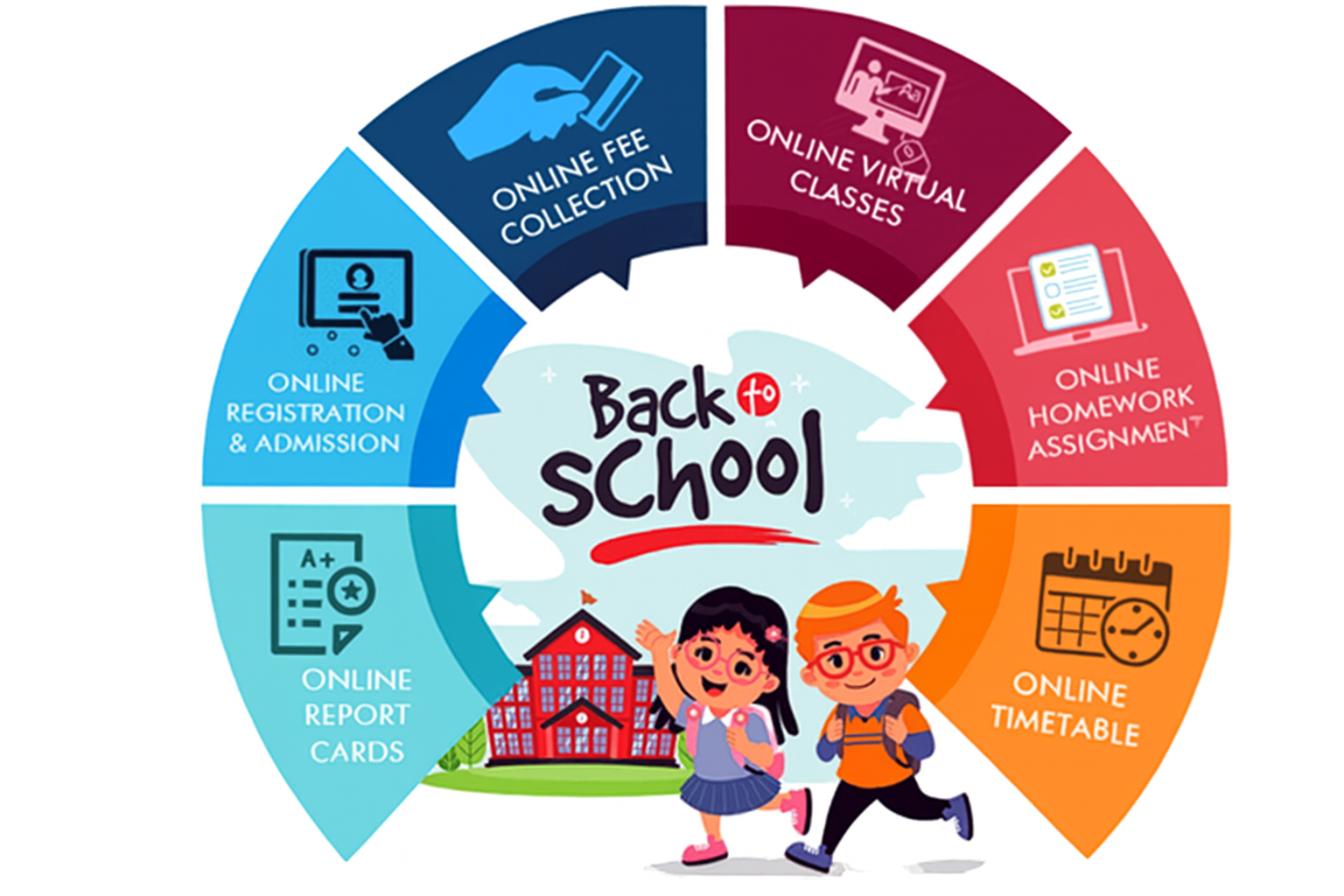
In today’s fast-moving world, education is no longer limited to classrooms, blackboards, and registers. As schools step into 2025, the need for a school management system (SMS) has become more than just a choice—it’s a necessity. With the rise of digital education, schools are under constant pressure to modernize operations, keep students engaged, and streamline administrative tasks. That’s exactly where a school management system steps in.
The Shift Towards Digital Education in 2025
Over the past few years, education has undergone a massive digital transformation. Online classes, smart boards, e-learning platforms, and AI-driven assessments have become part of everyday schooling.
But here’s the challenge: while teaching methods have evolved, school management often still relies on outdated systems—manual registers, piles of paperwork, and endless files. This gap slows down efficiency and creates unnecessary stress.
A modern school ERP in 2025 bridges this gap, helping schools shift from old practices to smart, technology-driven processes that match the pace of digital education.
Why Investing in a School Management System is Crucial
1. Streamlines Administrative Work
From attendance to fee collection, report cards to timetable management, administrators handle countless tasks daily. A school administration software automates these repetitive jobs, reducing errors and saving hours of manual work.
With a reliable school management software, schools can digitize their entire workflow—making processes faster, more accurate, and stress-free.
2. Improves Communication
Strong communication between teachers, students, and parents is the backbone of successful schools. A school management system ensures seamless interaction by sharing instant updates, circulars, progress reports, and announcements through a single platform.
This keeps parents informed and engaged while giving teachers more time to focus on teaching instead of chasing paperwork.
3. Enhances Student Engagement
Students today are digital natives. They learn best when schools embrace interactive and tech-driven platforms. Features like online assignments, digital grade reports, and e-learning integrations make education smoother and more engaging.
By adopting a digital school software, schools can create an environment that motivates students to actively participate in their learning journey.
4. Data-Driven Decision Making
Schools in 2025 can’t rely on guesswork. A school management system provides powerful insights—whether it’s student performance trends, fee collection reports, or teacher workloads.
With real-time analytics, school leaders can make informed decisions that improve efficiency and support growth.
5. Supports Growth and Scalability
As schools expand, managing multiple campuses or larger student numbers becomes challenging. A robust student information system (SIS) grows with the institution, making scaling up simple and efficient without sacrificing quality.
The Future of Schools is Digital
The education landscape is changing rapidly. Schools that stick to manual processes risk falling behind, while those embracing digital solutions like a school management system are setting themselves up for long-term success.
It’s not just about convenience—it’s about creating smarter schools, empowering teachers, and improving the student learning experience.
Final Thoughts
Investing in a school ERP in 2025 is no longer optional—it’s essential. Schools that embrace this technology will not only streamline their operations but also foster a more engaging, transparent, and future-ready environment.
If your school is ready to modernize, explore our school management system today and take the first step toward smarter education.
After all, the future of education isn’t just about teaching—it’s about managing learning in the smartest way possible.
FAQ: School Management System in 2025
1. What is a School Management System?
A school management system (SMS) is software that helps schools manage their daily operations digitally. From attendance and fee collection to report cards and communication, it centralizes everything in one platform, reducing paperwork and saving time.
2. Why do schools need a School Management System in 2025?
In 2025, education has gone fully digital with online classes, e-learning platforms, and smart classrooms. Without a school management system, schools struggle to keep up with administration, communication, and student engagement. It’s no longer optional—it’s a necessity.
3. How does a School Management System improve communication?
A school management software improves communication by allowing instant sharing of updates, notices, progress reports, and circulars between teachers, students, and parents. This ensures transparency and keeps everyone connected on a single platform.
4. Can a School Management System help students learn better?
Yes! Students today are digital natives. A school management system supports them with online assignments, digital grade tracking, and e-learning integrations that make education more interactive and engaging.
5. Is a School Management System scalable for growing schools?
Absolutely. A robust school management system grows with your institution. Whether it’s handling more students, multiple campuses, or higher workloads, it adapts to your school’s needs and ensures smooth scalability.